Tuesday, February 28, 2023

Ford’s Top Selling Cars of 2022


 Like many industries throughout the United States, the auto industry navigated various complications over 2022, many of which resulted in supply-chain issues that hampered dealer inventories. A depleted inventory yielded above-average prices across the industry, leading to a decline in sales compared to 2021. Despite these challenges, several auto manufacturers, including Ford, produced high-selling vehicles.

Ford placed three vehicles among the top 25 best-selling cars, trucks, and sports utility vehicles (SUV) of 2022, including the No. 1 selling vehicle in the US, the Ford F-Series. Sales for the F-Series were particularly impressive, considering the model was among many that impacted the global semiconductor chip shortage. Ford stands at the forefront of an American public that has continued to place its trust in pickup trucks and SUVs, with only two passenger cars ranking among the 10 best sellers.

The Ford F-Series, also known as the Ford F-150, moved approximately 653,957 units in 2022, equating to nearly 141,000 more trucks sold compared to the Chevy Silverado, the nation’s second-highest-selling vehicle. Unfortunately, Ford was forced to endure the same supply chain and inventory issues as other manufacturers; the F-Series also led all vehicle sales in 2021 but managed to sell more than 726,000 units that year, representing an 8 percent decline in 2022. Approximately 787,422 F-Series trucks were sold in 2020.

The F-Series has spent over four decades as the nation’s top-selling vehicle and nearly five decades as America’s most popular pickup truck. While the F-Series has given Ford a strong toehold in America’s auto landscape, the manufacturer remains locked in competition with peers. Late in 2021, Ford secured a three-month streak as the nation’s overall best-selling automaker, the manufacturer’s first streak of this length since 1974.

Understanding the competitive and evolving American automotive market, Ford has sought to augment and optimize options for its top-selling product. In 2021 Ford introduced a hybrid option for the F-Series, along with a Super Duty model. In 2022, meanwhile, Ford introduced the Lightning, an electric version of the F-150. Sales for the Lightning approached 16,000 entering 2022.

Of course, the F-150 was not the only Ford model making waves in 2022. The Ford Explorer finished 2022 as the No. 14 best-selling car in the United States, holding its position from 2021, with nearly 208,000 units sold. While the Jeep Grand Cherokee and Toyota Highlander have more than challenged Ford in the mid-size SUV marketplace, the Explorer’s 6 percent sales decline from 2021 was smaller than many manufacturers experienced during the year.

Finally, the Ford Escape ranked as the No. 24 most popular car in the US for 2022. The Escape sold 137,370 units in 2022 and has faced stiff competition from the Bronco Sport. However, despite global supply chain issues, Escape experienced a sales decline of just 6 percent, compared to a 19 percent drop between 2020 and 2021.

Toyota and Chevy were the only manufacturers with multiple vehicles among the nation’s 10 best-selling cars. Beyond the Ford F-Series, the Chevy Silverado was the only vehicle to surpass the 500,000 units sold threshold.


Wednesday, February 1, 2023

Tips When Choosing a Sport Utility Vehicle


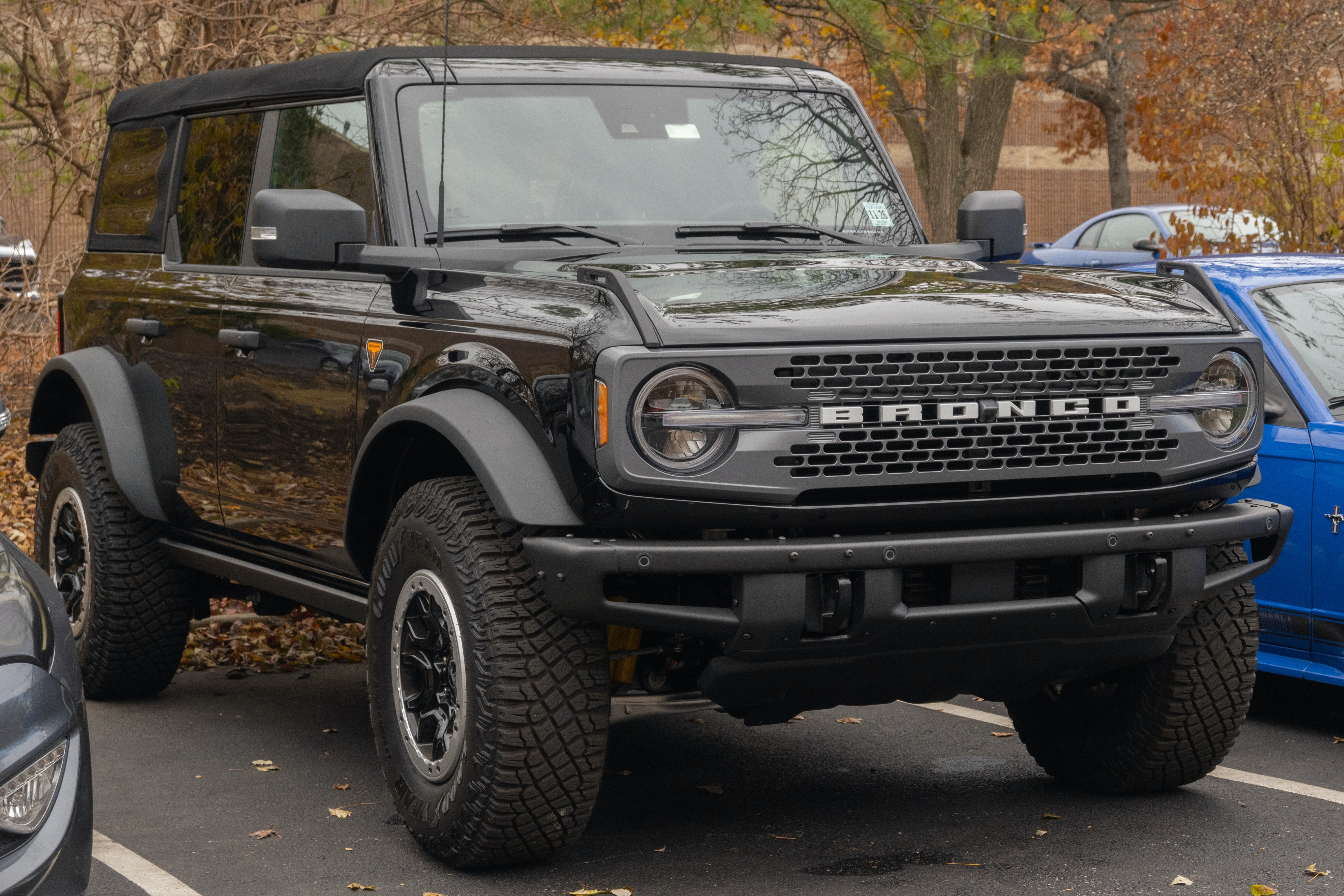
 Generally, a sport utility vehicle (SUV) is defined by a tall roof, high ride height, and elevated seating position. For many buyers, the SUV exterior design is important. However, exterior styling is a subjective quality that depends on your individual preferences, emotions, and need for functionality. For example, if you decide to buy a Ford Bronco Sport, it can do hard work. On the other hand, some SUVs come with more rugged capabilities with chunky tires, reinforced lower panels, and elevated ride height.


Others SUVs are city slickers with dazzling LED accent lights, elegant lines, and shiny chrome trim. In terms of features, remember that form usually follows function. Therefore, consider factors like how high you might need to step in and out of the SUV. Also, consider how high (lift-over height) you will have to lift your cargo when loading it.


Where do you intend to do most of your driving? Off-road driving, for instance, will require the strength of four-wheel drive (4WD) vehicles. A 4WD offers more stability control and better traction, useful features when taking the vehicle off-road or towing something like a boat or trailer camper. A 4WD model might also serve you better if you live in a place that snows heavily, as they are often equipped with traction-enhancing differential locks and low-range crawl gears.


For more common driving, an all-wheel drive (AWD) boosts traction. Whether maneuvering a wet road or reducing acceleration wheel spin, an AWD is good because it usually engages automatically. However, rear-wheel or front-wheel drive will suffice if you want cargo or passenger capabilities in an SUV.


Nearly all SUVs can carry at least five passengers. Some full-sized and midsized models come with a third-row seat that boosts the carrying capacity to six, seven, or even eight people. Although SUVs are generally known as large vehicles, getting slightly smaller models, including crossover options, is still possible. A five-seater family might be suitable for a family of four, but if you have a larger family or travel with many friends, a seven or eight-seater might be your best option.


Regarding cargo space, the cubic footage available in an SUV might not be a definitive guide, although it gives a broad idea. Pay attention to how easy loading cargo might be. For example, could the rear bumper be too high to make loading difficult? Many three-row fold seats can fold. But how do they fold into the SUV's floor to create additional cargo space? Do they lie flat?


Finally, don't overlook safety and driver assistance features. For example, many drivers prefer SUVs because of their elevated height, enabling a better road view. That, however, may not always be the best thing. The styling and design of most SUVs often mean it's hard to get a good view of the rear or sides, particularly when parking or changing lanes.


For that, look for an SUV with a blind-spot monitor as an option or standard. This is an audio or visual alert when another vehicle is in your blind spot. Also, look for an SUV with rear and front parking sensors. Other common advanced driving aids include lane departure control, adaptive cruise control, and automatic emergency braking.

Thursday, January 19, 2023

The Ford Bronco Generations


 The Ford Bronco, a venerable American sport utility vehicle (SUV), is famous for its classic design, versatility, durability, and most importantly, its off-road capabilities. The original Bronco, launched in 1966, was a compact SUV that came in three designs - a sport utility pickup, a roadster, and a wagon, a two-door SUV with a removable top, which is echoed in the new 2021 Bronco.


In 1978, Ford introduced the second-generation Bronco, rugged and boxy in style and utilitarian, to compete with the Chevrolet K5 Blazer and the Dodge Ramcharger. It came with a 5.8L or 6.6L V8 engine, a 4-speed manual transmission and an independent front suspension system that made it more off-road capable. This Bronco came with four-wheel drive and four-door model options.


The third-generation Bronco (1980-1986) featured a completely redesigned frame and body to make it lighter, smaller, and more fuel-efficient. Its engine variants included a 4.9L V-6, a 5.8L V-8, and a smaller 4.9L V-8, with all versions displaying impressive on- and off-road performance. This generation Bronco was also the first to feature independent front suspension instead of the “moonbeam” front end.


The fourth-generation Bronco (1987-1991) had minor upgrades, with the most notable being an updated cabin and a visual change to the bumper to match that of the eighth- generation Ford F-150. This Bronco kept the same engines as the third generation, but added a 5-speed manual transmission and a new 4-speed automatic. The various trim levels of the Bronco were the XL, XLS, Eddie Bauer, and a Special Edition celebrating its 25th anniversary.


Generation five (1992-1996) had minimal body and style upgrades and the same engines as the previous generation, but this Bronco sported enhanced safety and utility features, including a three-point seat belt system, driver’s-side airbags, and air conditioning. After this generation, production stopped for more than two decades.


The new 2021 Bronco was launched with new looks, style, comfort, and better functionality. These features made it stand out considerably from its earlier designs. This generation came in six unique trim levels - Base, Badlands, Black Diamond, Wildtrak, Outer Banks, and Big Bend. It also came in a two and four-door configuration with a roof designed to be easily detachable, the with the four-door also being convertible.


In terms of performance, the 2021 Ford Bronco included a robust powertrain lineup of 3.5L V6, 2.7L V6, and 2.3L V6 EcoBoost engines that came with either a 10-speed automatic or 7-speed manual transmission. Its sophisticated terrain management system, designed to boost its on- and off-road capabilities, let drivers choose between seven distinct driving modes, allowing them to adjust the SUV’s performance on any terrain. The 2021 Ford Bronco’s off-road technology, such as the independent front suspension (IFS), active four-wheel drive, and terrain management system, meant the vehicle was much more capable in mud or sand.


The 2021 Ford Bronco also offered a Sasquatch package, an additional set of features designed to enhance off-roading performance. This was available in all trim levels, excluding the Raptor. The package included 35-inch mud tires, upgraded suspension, electronic locking front and rear differentials, heavy-duty Dana front and rear axles, and a 4.7:1 rock crawl ratio. The package also featured a distinctive grille and hood, a bigger hood scoop, skid plates, and rock rails. However, it only came with a 10-speed automatic transmission, the 7-speed manual not being offered.


The recently launched 2023 Ford Bronco model runs on a new body-on-frame chassis that is stiffer and lighter than its predecessor. While many other things, like the engine, transmission, dimensions, and utility, remain the same or feature minor changes compared to the previous version, the 2023 Bronco adds performance upgrades to make it more capable off-road. For instance, the Ford Bronco Raptor, the common 2023 variant, sports improved durability, a “goes-over-any-terrain” (GOAT) feature that offers three drive modes, and an upgraded two-speed transfer case with a crawl ratio of 94:75:1 with the manual transmission. It also has a high-performance off-road stability suspension (HOSS) feature for a more comfortable and stable ride in off-road conditions.


Thursday, January 5, 2023

The Ford Bronco Sasquatch Package


Since the return of the Ford Bronco SUV (sports utility vehicle) in the four-wheel-drive arena, Ford enthusiasts have been making the most of its off-road capabilities and enjoying its many features. To boost the vehicle's capabilities, the company introduced the Sasquatch package, the most advanced off-road package ever offered on the Ford Bronco.


The Sasquatch package, available for all models in the Bronco lineup excluding the Raptor, is designed to offer next-level performance and capabilities. It includes 17-inch wheels sporting 35-inch all-terrain tires, a 4.7:1 final drive ratio, electronic locking front and rear differentials, heavy-duty Bilstein shocks, and high-performance off-road stability suspension (HOSS). The Sasquatch package also includes high-clearance fender flares to provide extra clearance for larger wheels and tires and rock rails to protect the body against damage.


When it comes to the interior, the Bronco's Sasquatch package offers both comfort and simplicity, with easy to operate and access controls. The 8-inch or 12-inch navigation touchscreen that the Sasquatch package features invites users to a world of information and entertainment, while additional accessories allow them to wirelessly charge their smartphone and integrate with Android Auto or Apple CarPlay.


The Sasquatch package's exterior pays homage to the iconic 1966-1977 Bronco, with the vertical taillight design and the round headlights enclosed in the single-piece rectangular grille as significant elements. The Bronco also comes with a two-door removable top option with a modular hardtop and a four-door option with a top that is removable and convertible.


With the sasquatch package, there are notable changes in the height of the Ford Bronco, with the base variant being 73”, the Wiltrak 75.2”, the Badlands 73.9”, and the Big Bend 72.9”. Also, the Bronco's departure, approach, and break-over angles without the Sasquatch Package are 29.8, 35.5, and 21.1 degrees for a two-door and 29.7, 35.5, and 20 degrees for a four-door vehicle, respectively. However, with the package, those angles become 37.2, 43.2, and 29 degrees for the two-door model and 37.0, 43.2, and 26.3 degrees for the four-door version.


Price-wise, upgrading to the Ford Bronco Sasquatch package is approximately $5000, but this may depend on the model purchased and the driving experience one wants. For instance, adding a $6,590 Sasquatch package on a $30,800 base variant of the Bronco may give one the ultimate driving experience on any terrain. However, because adding the Sasquatch package to a Bronco variant may sometimes be more expensive than acquiring a better variant, one should consider the features and benefits of purchasing a better variant versus upgrading the less expensive one.


How does the Ford Bronco's Sasquatch package compare with the Jeep Wrangler Willys edition? While both come with 17-inch wheels, the Wrangler sports 32-inch mud tires compared to the 35-inch of the Bronco. The Wrangler also has a limited-slip differential, rock rails, and shocks from the more capable Rubicon trim, and heftier brake calipers and rotors. When it comes to performance, the Bronco performs better on and off the road, while the Wrangler has better fuel economy and acceleration.


However, one main limitation of the Ford Bronco Sasquatch package is that it only comes with the 10-speed automatic transmission. Without the 7-speed manual option, drivers miss the crawler low gear, particularly designed for a better low-speed off-roading experience. When a user aired this concern on Twitter, Mike Levine, Ford's spokesman, confirmed that only the 10-speed automatic transmission was available in the package, and noted that the company was open to feedback.


Tuesday, November 22, 2022

The Rationale and Scope of Long-Term Planning in Business


 Leo Sfikas is a former general manager of Currie Motors Auto Group in Chicago, Illinois. His responsibilities included overseeing the development of the company's marketing strategies, managing large inventories, building the company's reputation online, and inspecting all the processes at the facility. Leo Sfikas improved the business growth through strategic and long-term planning and has successfully mentored over 200 personnel on sales principles and industry practices.


Long-term planning is when the management of the business sets goals for the business to achieve in four or more years. Most goals set for this period are usually centered around solving long-term problems and achieving the final vision of the founder or owner of the business.


This kind of plan considers the current socio-political climate of the location of the business and how such a climate may affect the economy in the future, which may in turn affect the business's profitability. It also includes budgeting for large equipment and personal changes that the business would require to reach its full potential.


Businesses that do not plan for the long term often do not stay long in the market because long-term planning is key to sustainability and understanding how the market's needs change for the business to modify their product or service to reflect such changes.


Friday, November 11, 2022

Ford Urges Dealers to Invest in Electric Vehicles


 A skilled general manager with nearly four decades of managerial experience in the automobile industry, Leo Sfikas served as the general manager of Currie Motors Auto Group in Chicago, during which he was responsible for business growth and operations, as well as its strategic vision and long-term planning. One of Leo Sfikas’ notable accomplishments included leading Currie Motors Ford of Frankfurt to a No. 1 regional ranking in 2006.


Ford encourages its dealers to invest in upgrades that will enable them to sell electric vehicles (EVs) made by the automobile manufacturer. As of the time of announcement in April, Ford had rolled out three EVs - the 2022 Ford F-150 Lightning pickup, the e-Transit van, and the 2022 Mustang Mach-E crossover. Ford dealers are eligible for EV certification through the investments.


Ford dealers can choose to invest $500,000 or $1.2 million on upgrades via two programs. High-tier dealers must invest $900,000 upfront in exchange for a special “elite” EV certification that qualifies them to receive more EVs. Ford executives urge dealers to invest more than $1 million on upgrades to boost profit and reduce costs.


According to executives, the goal of the automobile company is to ensure that dealers remain an invaluable part of its supply chain. Ford's network of dealers includes nearly 3,000 entities.

Tuesday, October 4, 2022

Electric Vehicles on the next Growth Engine in Chemicals


The automotive market is undergoing rapid change. Based on a forecast by the McKinsey Center for Future Mobility, battery electric vehicles (BEVs) and plug-in hybrid electric vehicles (PHEVs) will make up more than 55 percent of new vehicle production by 2030 across China, Europe, and North America. This represents 47 million units globally—seven times more than in 2021.
 

Adoption has moved beyond start-ups, with all mainstream OEMs now focused on electric vehicles (EVs) and with forecasts for EV penetration continuing to accelerate: more than 500 EV programs will come to market from 2024 to 2026 alone. In short, tomorrow’s vehicle archi-tecture is being defined today, offering a narrow window of opportunity for chemical companies to set the standard for materials applications in the years to come.
 

Although EVs have been a hot topic in the chemicals industry for some time, a major paradigm shift in automotive procurement practices has made the space dramatically more attractive for chemical players, not considering cell chemistry, a market governed by unique value chain dynamics. Whereas chemicals in the automotive industry were traditionally considered on a unit-cost basis—with suppliers barely able to hold value over the program life cycle—savvy automotive OEMs and tier suppliers are now moving to a system value approach. These players recognize that materials solutions can provide outsize value in reducing cost and improving the reliability of expensive parts such as batteries, power electronics, and electric motors.
 

To illustrate this point, consider the powertrain of a typical BEV. The battery, inverter, and electric motor together cost more than $10,000—often three to four times the cost of their equivalent parts in a conventional combustion engine vehicle. Hence, the vehicle system must come down in cost for BEVs to gain widespread adoption.
 

In this context, leading OEMs have discovered that using the right thermal and insulation materials in the powertrain can lead to significant increases in system efficiency and reductions in warranty cost, which together can be worth several hundred dollars per vehicle. These savings make it much easier for OEMs to invest in enabling these materials.
 

For example, a transition from silicon oxide (Si) to silicon carbide (SiC) power modules in the inverter can generate system savings on the order of $200 per vehicle for OEMs. This is because of the semiconductor’s greater power efficiency (reducing battery cost) and more optimal cooling profile (reducing thermal management cost), despite SiC costing more than Si counterparts. Consequently, innovations in materials that enable system cost reductions can provide tremendous value to OEMs.

Friday, September 9, 2022

The Future of Interior for Automotive


Imagine a world where a car’s interior, and the accompanying cabin experience, are two of the most important vehicle differentiators. In this world, affiliates of a vehicle brand are not waiting for the next start of production of a vehicle but for the next operating-system update; OEM CEOs introduce new human-machine-interface systems as stand-alone products to as much anticipation and fanfare as new models, and car magazines discuss comfort levels rather than acceleration and horsepower. This world is now emerging within the automotive industry, and it will transform how OEMs make and market cars.

Very soon, the cabin experience is expected to take the spotlight away from automotive elements that have traditionally dominated headlines, including engine performance, exterior design, and powertrains. The rapidly evolving ACES megatrends—automation, connectivity, electrification, and shared services—will change the configuration of cars and allow vehicle occupants to enjoy new experiences during trips.

To assess the growing importance of vehicle interiors, we reviewed insights from eight sources. These included an analysis of the interiors of over 50 current and concept vehicles; roundtable discussions and in-depth expert interviews with over 60 decision-makers from 25 leading players; various consumer surveys; and panel discussions with automotive experts. We also analyzed mobility patterns by customer segment and drew on our work with automotive companies on vehicle interiors, connectivity, HMI, and the customer experience.

Our research clearly revealed the growing significance of vehicle interiors and the in-car experience. For instance, a survey revealed that 71 percent of automotive executives expect vehicle interiors to become more important, while only 38 percent held the same views about vehicle exteriors.

In our article, “The future of interior in automotive,” we examine the implications of this research, focusing on two areas. First, we review the evolution of vehicle interiors in response to five forces (exhibit). One basic shift involves the emergence of new vehicle types, including, electric vehicles which will have a massive effect on interior layouts and could enable features that were previously unimaginable, such as swivel seats. Similarly, innovations in connectivity and HMI could alter the cabin experience. For instance, automated assistants might have an improved ability to respond to the voices of all passengers. The cabin itself will become more comfortable, with OEMs providing more “homelike” trim, such as seats that resemble those in a living room, or other features that enhance the driving experience, such as automatic climate-control systems. As OEMs experiment with new interiors, they must keep sustainability issues in mind, since customers are increasingly concerned about decarbonization. Cost control will also be critical, especially for features that are not readily visible or do not add value.

As vehicle interiors evolve, OEMs and suppliers should consider how to position themselves for future success. With new players catching up or even leading in connectivity and interior experience, established players cannot rely on their past reputations and must instead articulate their future vision.

Friday, September 2, 2022

Chicago Area Auto Dealership Raises Funds for Folds of Honor


 A longtime automotive executive, Leo Sfikas helped guide the Currie Motors Auto Group in Chicago for nearly two decades and oversaw several growth-focused Ford dealerships. A strong supporter of the US Armed forces and those who serve their country, Leo Sfikas has coordinated events that raised money for organizations such as Folds of Honor.


The nonprofit had its inception in the personal experiences of an Oklahoma Air National Guard F-16 fighter pilot, who witnessed firsthand the profound impact that a service member's death had on loved ones. Since 2007, the Iraq War veteran has coordinated scholarships that provide educational support to the children and partners of disabled and fallen military members. The symbol of this is a folded flag that serves as a remembrance of those who sacrificed so that others can enjoy peaceful and productive lives.


As general manager of Currie Motors Ford of Valparaiso, Mr. Sfikas facilitated a Memorial Day Car, Truck, and Bike Show that benefitted Folds of Honor each year. Held under large tents, the show brought together automotive enthusiasts and featured 13 classes of vehicles, with a trophy awarded to the winner of each class. The event featured a hamburger grill that kept attendees well fed while they participated in a raffle for items such as the new Ford Mustang to support a worthy cause.


Friday, August 26, 2022

Unleashing the Ford Transformation


Ford is continuing to transform its global automotive business, accelerating the development and scaling of breakthrough electric, connected vehicles, while leveraging its iconic nameplates to strengthen operating performance and take full advantage of engineering and industrial capabilities.

“This isn’t the first time Ford has reimagined the future and taken our own path,” said Ford Executive Chair Bill Ford. “We have an extraordinary opportunity to lead this thrilling new era of connected and electric vehicles, give our customers the very best of Ford, and help make a real difference for the health of the planet.”

Last May, Ford President and CEO Jim Farley introduced the Ford+ plan, calling it the company’s biggest opportunity for growth and value creation since Henry Ford scaled production of the Model T. The formation of two distinct, but strategically interdependent, auto businesses – Ford Blue and Ford Model e – together with the new Ford Pro business, will help unleash the full potential of the Ford+ plan, driving growth and value creation and positioning Ford to outperform both legacy automakers and new EV competitors.

“We have made tremendous progress in a short period of time. We have launched a series of hit products globally and demand for our new EVs like F-150 Lightning and Mustang Mach-E is off the charts,” Farley said. “But our ambition with Ford+ is to become a truly great, world-changing company again, and that requires focus. We are going all in, creating separate but complementary businesses that give us start-up speed and unbridled innovation in Ford Model e together with Ford Blue’s industrial know-how, volume and iconic brands like Bronco, that start-ups can only dream about.”

Driving the change was recognition that different approaches, talents and, ultimately, organizations are required to unleash Ford’s development and delivery of electric and digitally connected vehicles and services and fully capitalize on the company’s iconic family of internal combustion vehicles.

The creation of Ford Model e was informed by the success of small, mission-driven Ford teams that developed the Ford GT, Mustang Mach-E SUV and F-150 Lightning pickup as well as Ford’s dedicated EV division in China.

“Ford Model e will be Ford’s center of innovation and growth, a team of the world’s best software, electrical and automotive talent turned loose to create truly incredible electric vehicles and digital experiences for new generations of Ford customers,” Farley said.

“Ford Blue’s mission is to deliver a more profitable and vibrant ICE business, strengthen our successful and iconic vehicle families and earn greater loyalty by delivering incredible service and experiences. It’s about harnessing a century of hardware mastery to help build the future. This team will be hellbent on delivering leading quality, attacking waste in every corner of the business, maximizing cash flow and optimizing our industrial footprint.”

Ford Model e and Ford Blue will be run as distinct businesses, but also support each other – as well as Ford Pro, which is dedicated to delivering a one-stop shop for commercial and government customers with a range of conventional and electric vehicles and a full suite of software, charging, financing, services and support on Ford and non-Ford products. Ford Model e and Ford Blue will also support Ford Drive mobility.

With the creation of Ford Blue and Ford Model e, Ford is announcing several leadership appointments. Farley will serve as president of Ford Model e, in addition to his role as president and CEO of Ford Motor Company.

Ford’s Top Selling Cars of 2022

 Like many industries throughout the United States, the auto industry navigated various complications over 2022, many of which resulted in s...